Commit to a reasoning move.
Practice asks for the step, classification, order, proof move, or decision that shows what you actually understand.
Gradus turns rigorous STEM practice into a reasoning loop: attempt, diagnose the breakdown, repair the prerequisite, and prove the idea transfers.
No account, no email, no waitlist wall. Demo progress stays in this browser.
Most tools explain more. Gradus makes the failed reasoning move visible, then sends you to the smallest prerequisite worth repairing.
Practice asks for the step, classification, order, proof move, or decision that shows what you actually understand.
A miss maps to a concept, fail point, and dependency so the next action is concrete.
The loop does not stop at a hint. It asks whether the repaired idea works in a different-looking case.
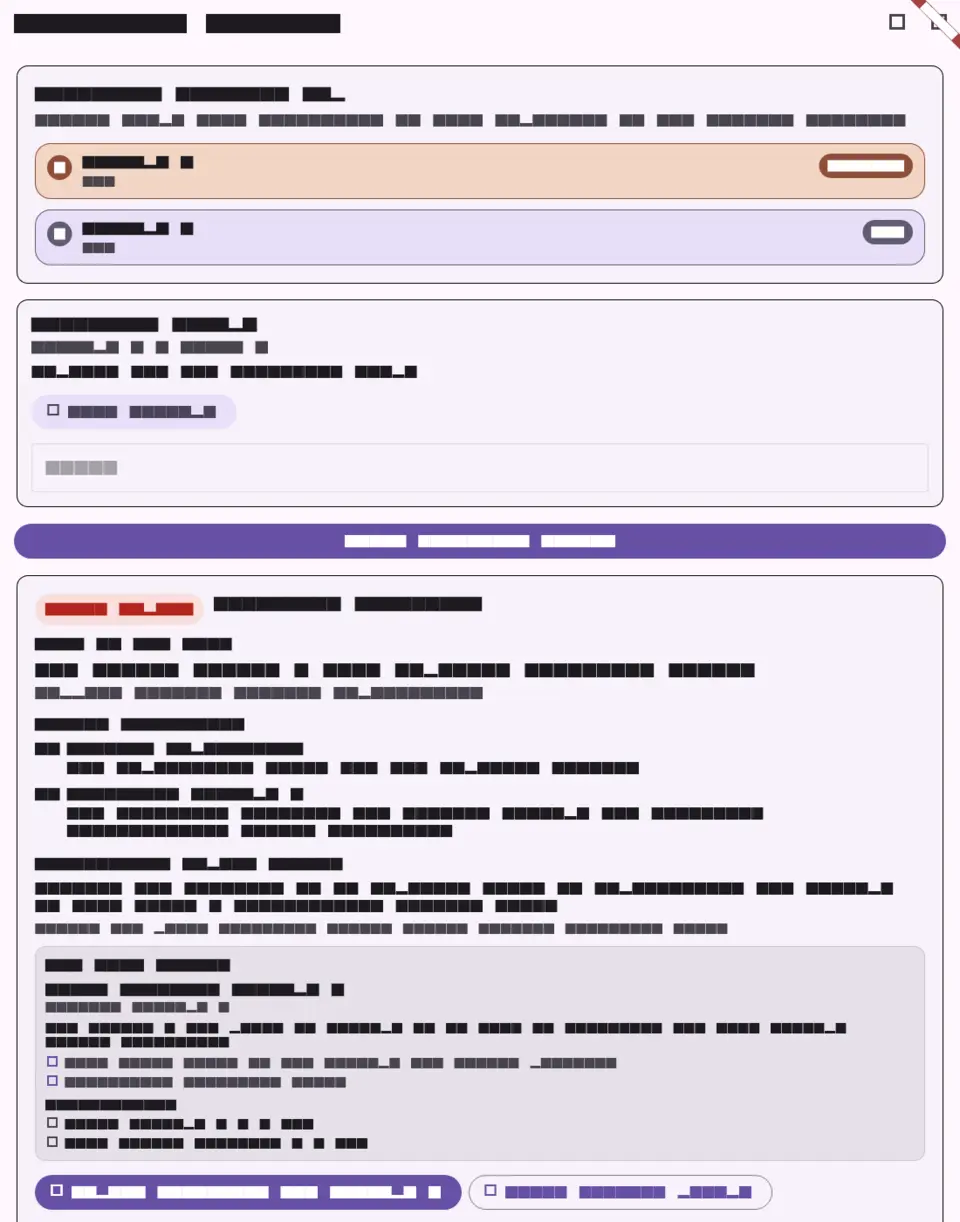
The canonical Gradus loop is Predict, Attempt, Explain, Diagnose, Repair, Transfer, Reflect. The homepage sells the short version because the demo lets learners feel it quickly.
Confidence and expectation become evidence, not decoration.
The item captures a reasoning choice tied to a concept graph.
Gradus identifies the fail point and the prerequisite behind it.
A repaired idea has to survive a new representation or context.
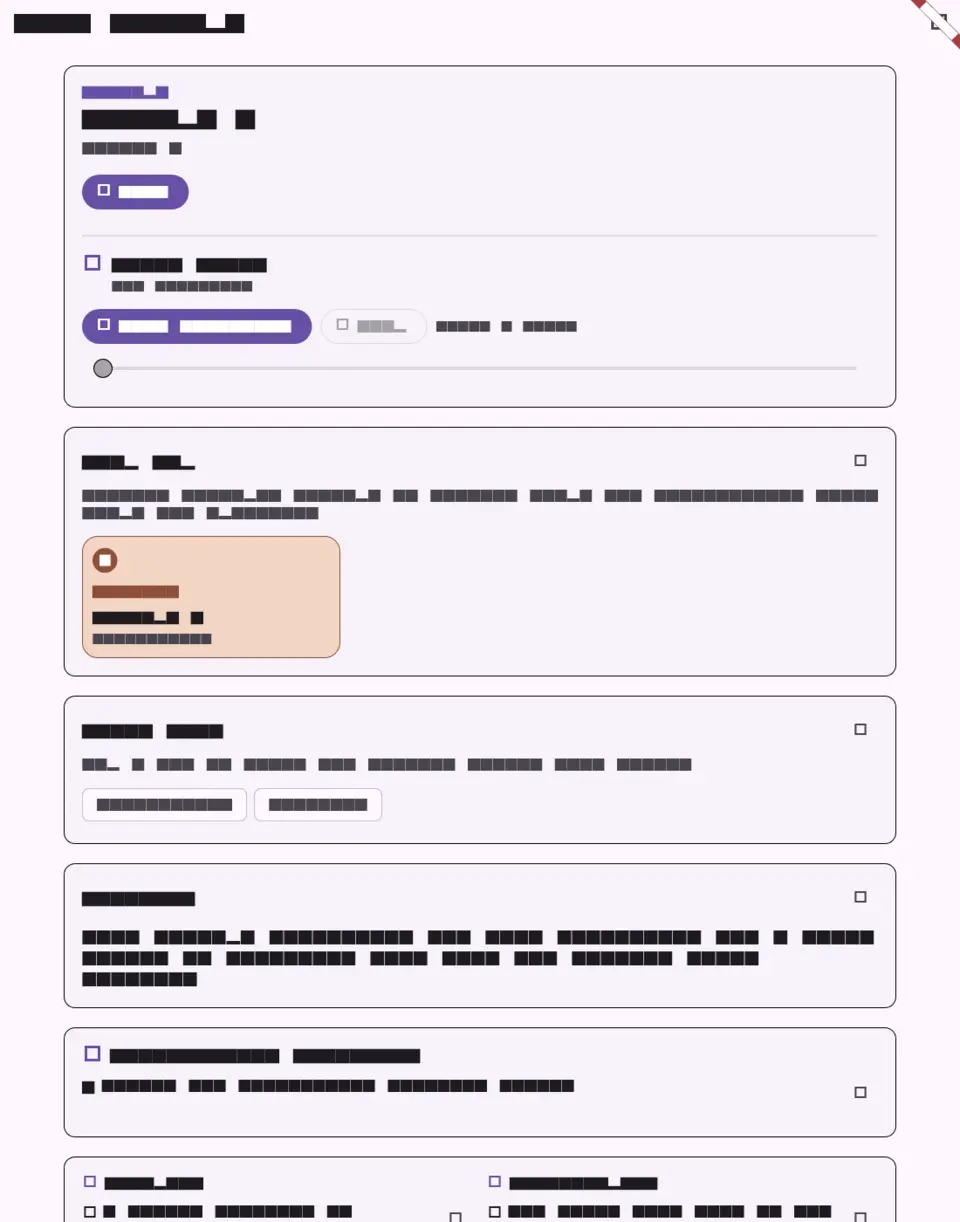
Focused lessons lead into the exact concepts that practice will test.
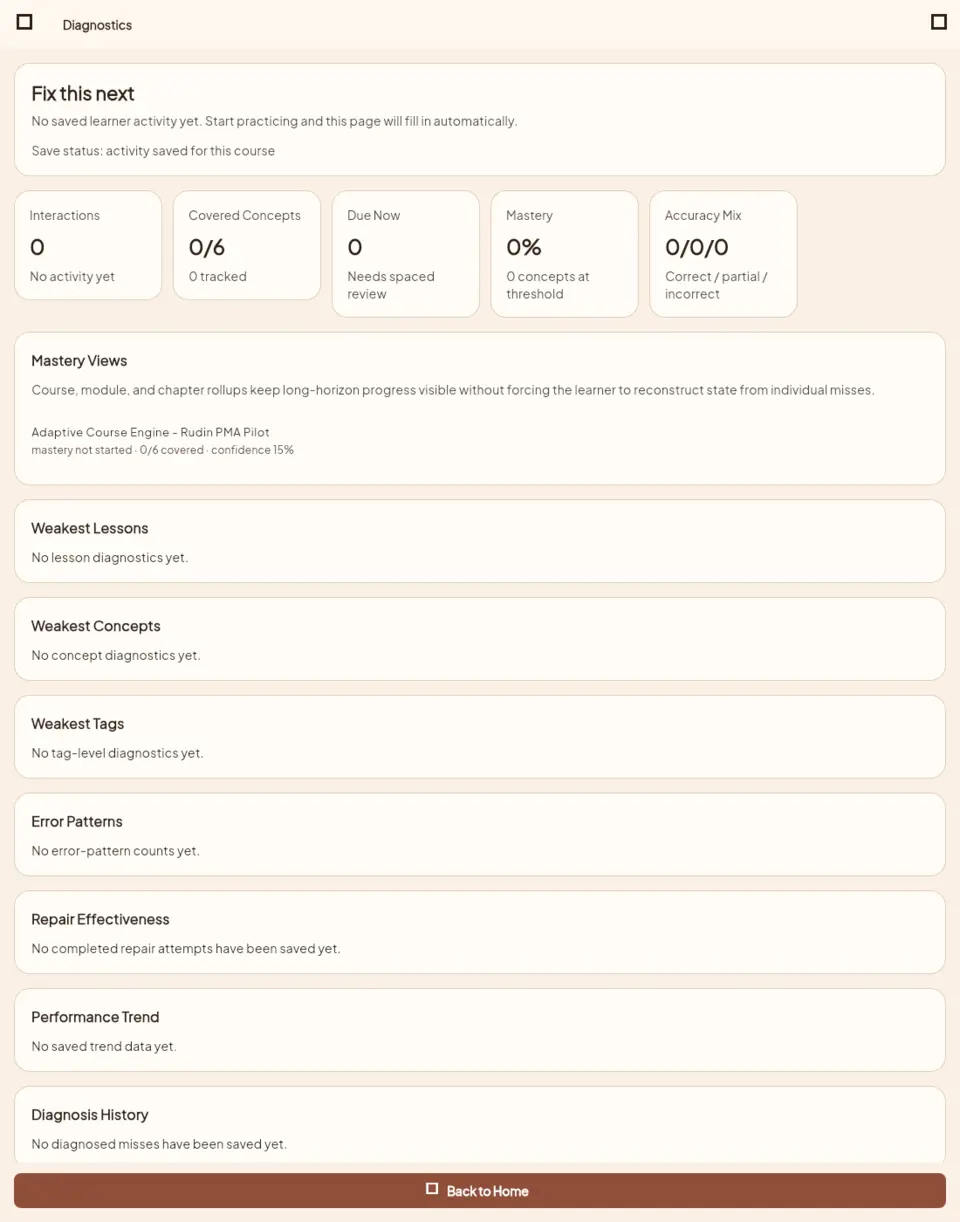
Diagnostics show what is improving, what still needs repair, and where the next useful action sits.
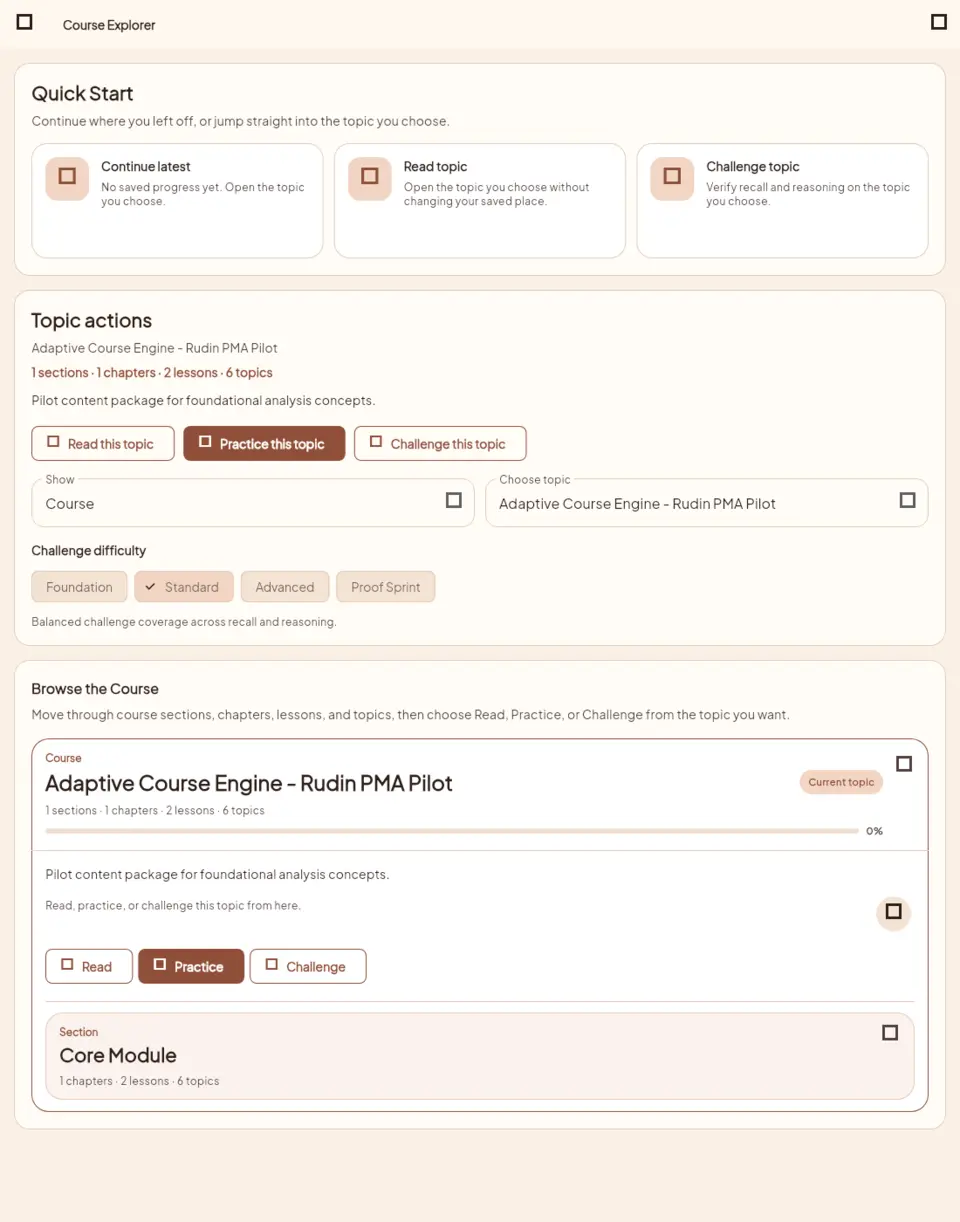
Courses are navigable by chapter, concept, prerequisite, and repair need.
Public previews are curated slices. The full catalog spans math, computing, science, engineering, analytics, and systems courses for ambitious learners.
Tradeoffs, uncertainty, expected value, constraints, and decision quality.
Invariants, correctness, graph methods, asymptotic reasoning, and data structures.
State, semantics, abstraction, interfaces, concurrency, and reliability.
Subspaces, rank, orthogonality, eigenvalues, SVD, and data geometry.
Relational models, SQL, indexes, transactions, recovery, and query plans.
Protocols, transport, routing, performance, wireless, and network security.
Gradus is not trying to replace teachers, textbooks, office hours, or student thinking. It adds a structured diagnosis and repair layer that stays inspectable.
Each practice item is tied to a concept, a known failure pattern, and a useful repair path. The feedback stays predictable when learners are working through difficult material.
The demo is local-only and no-information: no sign-in, no email, no waitlist wall, no course builder, and no cloud progress sync.
When used in pilots, diagnosis can describe class-level misconception patterns and the next intervention a teacher can make.
Authenticated releases remain learner-only and controlled while course quality, entitlement, teacher, and organization workflows mature.
The demo is short by design. It should prove the product loop before asking you for anything.
The beta is closed while courses are tested. Try Gradus first, then join the list if you want access to the full system.
Requested tracks help prioritize beta invites and course readiness work.